Not every creature in Scottish folklore wants to drown you, eat you, or steal your soul. Some of them just want to help.
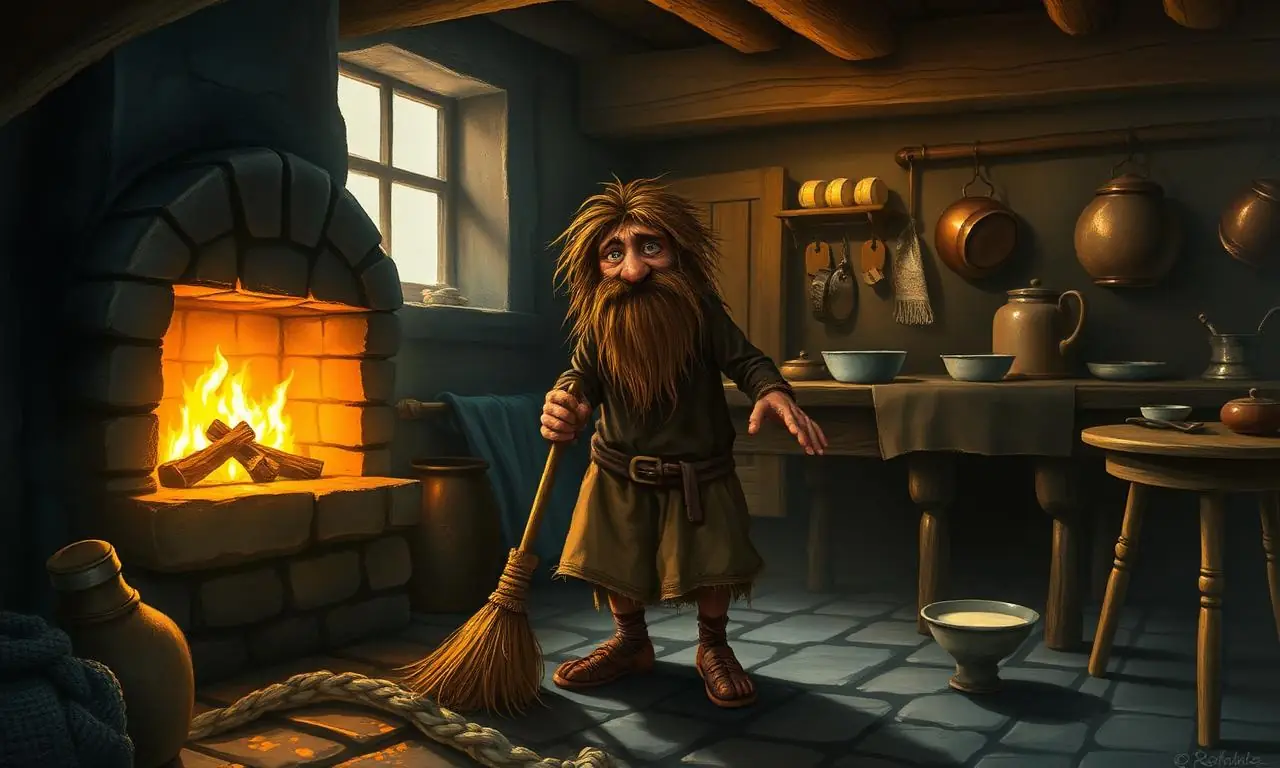
The Brownie — brùnaidh in Gaelic, broonie in Scots — is one of the most beloved figures in Scottish household tradition. He is small, perhaps two or three feet tall, covered in shaggy brown hair, and always dressed in tattered brown rags. He attaches himself to a particular farm or great house, and once he has chosen a hearth, he stays for generations.
What he does, he does at night. After the family is in bed, the Brownie sets to work: sweeping the floor, threshing grain, churning butter, stacking the firewood, mending broken tools. The household wakes to find their work half done — and the unspoken rule is that no-one ever, ever mentions it.
His payment is small and specific. A bowl of cream by the hearth. A bannock, plain, with no butter. Some households left a small piece of fresh-baked bread. That was all. Offer him coin and he was insulted. Offer him praise and he was embarrassed. And — most famously of all — offer him new clothes, and he was gone.
The 'gift of clothes' taboo is one of the strangest details in Scottish folklore. A kind farmer, seeing the Brownie shivering in his rags, would lay out a new set of warm wool clothes by the hearth as a thank-you. The Brownie would arrive, find them, and depart that very night — sometimes singing a sad little verse on the way out — never to return. Some folklorists think the clothes broke a magical contract; others say the Brownie saw them as a sign he was no longer needed.
Our Veiled Brownie design honours him at his happiest: in a quiet kitchen, broom in hand, the hearth still glowing, the family asleep upstairs. Treat your Brownie well and your croft will never want for help. Just leave the cream out. And whatever you do, do not knit him a jumper.