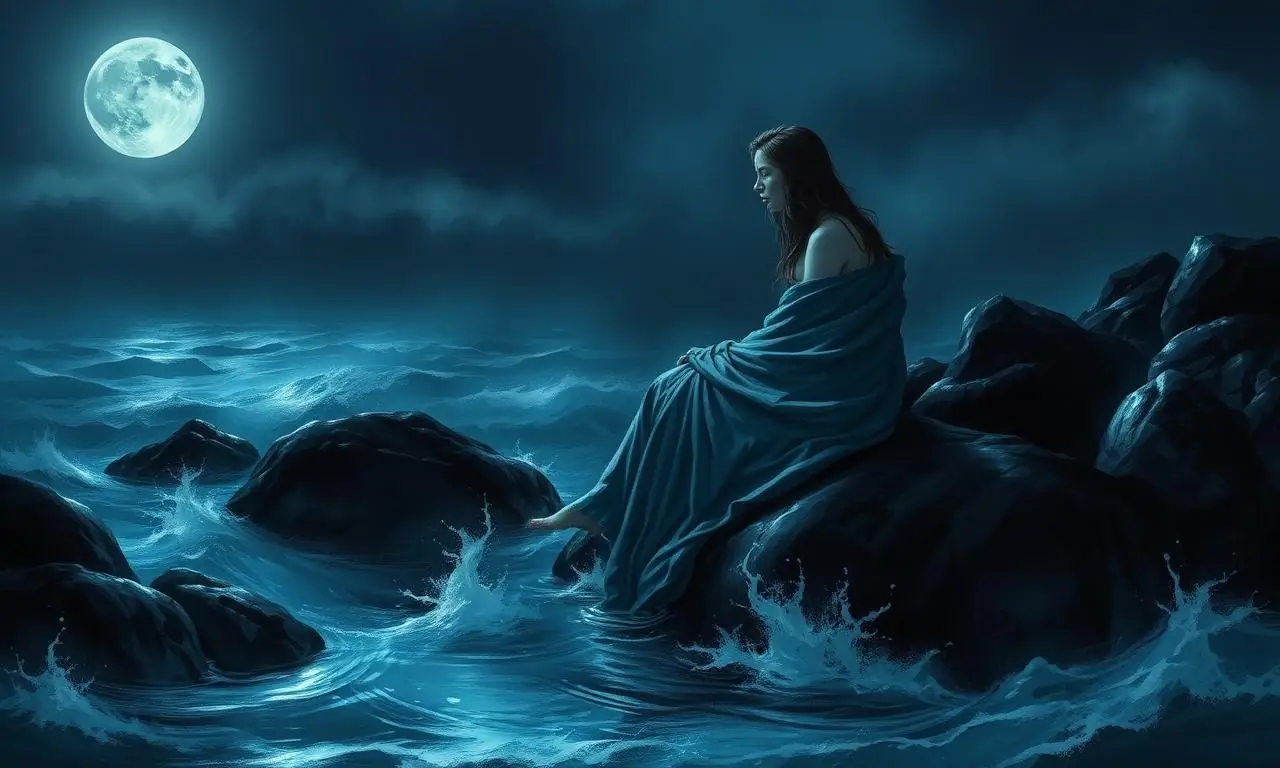
Selkies belong to the cold northern coasts — Orkney, Shetland, the Hebrides, and the wilder shores of Ireland and Iceland. They live in the sea as seals, but on certain nights they come ashore, slip out of their seal-skins, and dance in human form on the moonlit sand.
The danger, in every story, is the skin itself. A selkie cannot return to the sea without it. And there is always a fisherman or a lonely crofter watching from the rocks, who steals the skin and hides it in the rafters of his cottage.
The selkie, trapped in human shape, becomes his wife. She is gentle. She bears his children. She works the croft. But she stands too long at the window, and her eyes are always on the water. Years pass. Then a child finds the hidden skin in the loft and asks their mother what it is.
She takes it without a word. She walks down to the sea. She does not look back.
These tales are heartbreaking because nobody is quite the villain. The fisherman is lonely. The selkie is loved. The children are real. And yet the sea always wins, because the sea was hers first.
The selkie endures because she gives shape to a feeling many of us know: belonging to two worlds at once, and never being entirely at home in either.