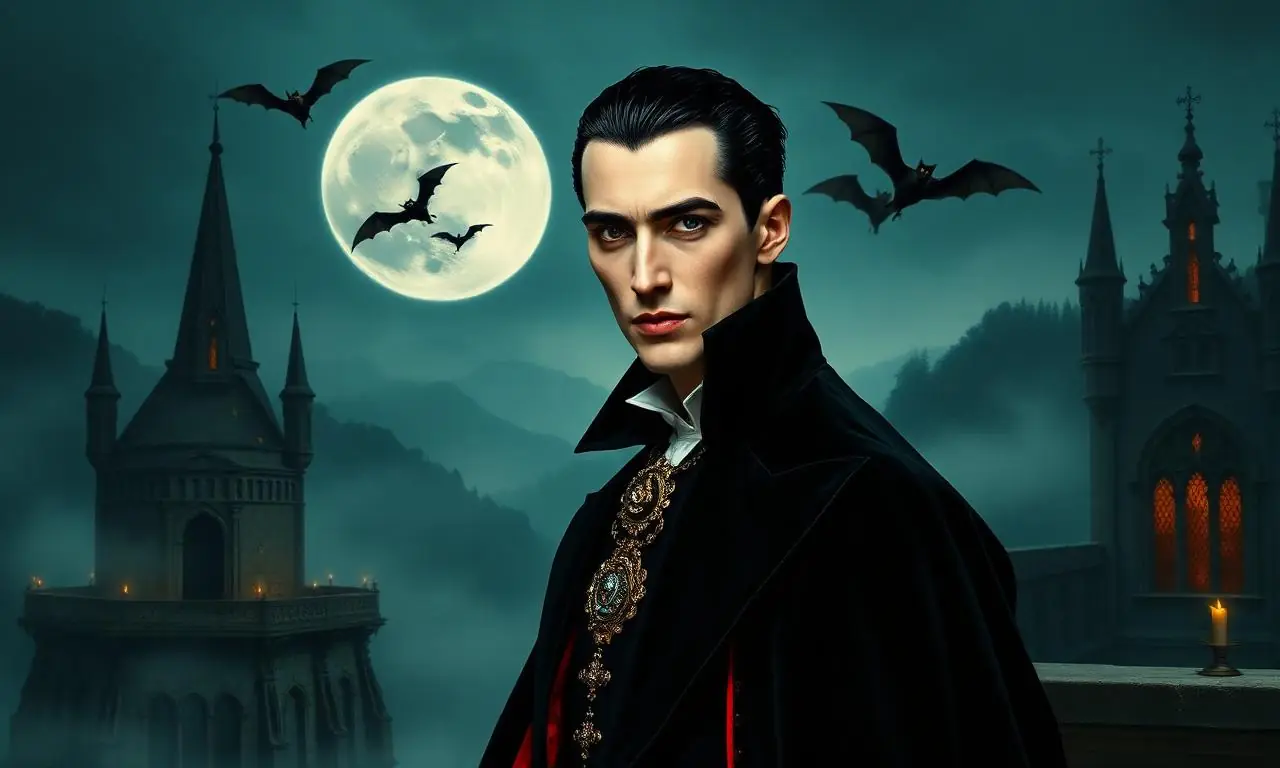
Most people think of the vampire as Bram Stoker's invention — the cape, the castle, the Carpathian count. In truth Stoker was working from much older material. The vampire as we know him is the polished literary descendant of a folk belief that gripped the villages of Eastern Europe for centuries: that the dead, under the wrong circumstances, do not always stay buried.
In Slavic folklore the vampyr (or upir, or strigoi) was a corpse that returned at night to drink the blood or life-force of its own family. The signs were grim and specific. A body that did not decay. Skin that looked too red. Long fingernails or hair found growing in the coffin. A village struck by a sudden wasting sickness — usually what we now recognise as tuberculosis — would dig up its recent dead, looking for the one who refused to die properly.
The countermeasures were brutal. A stake of hawthorn or ash through the heart. Garlic packed into the mouth. The head removed and placed between the legs. Iron sickles laid across the throat so the corpse would cut itself if it tried to rise. Across the Balkans, archaeologists have found medieval graves with exactly these markers — real fear, real ritual, real bodies pinned down so they could not come back.
The 18th century brought a brief mainland European panic. Reports from the Habsburg empire of named vampires — Petar Blagojević in 1725, Arnold Paole in 1726 — reached Vienna and from there the courts of Western Europe. For about a decade vampires were a serious diplomatic problem, debated by theologians, doctors and emperors. The empress Maria Theresa eventually sent her personal physician to investigate; he reported, sensibly, that there were no vampires, only frightened villagers and badly buried corpses.
Then came the writers. John Polidori's The Vampyre (1819) gave the creature a top hat and aristocratic manners. Sheridan Le Fanu's Carmilla (1872) added the seductive female vampire. Bram Stoker's Dracula (1897) fused everything into the figure we now know: foreign, noble, beautiful, terrible — Vlad III's name borrowed for a Wallachian count who shouldn't exist.
The vampire endures because he gets at something real. Grief that won't let go. Love that becomes possession. Hunger that outlives the body. Wear him and you wear the oldest folk-horror in Europe, dressed in opera silk: the dead who refuse to lie down, and the night that does not end.