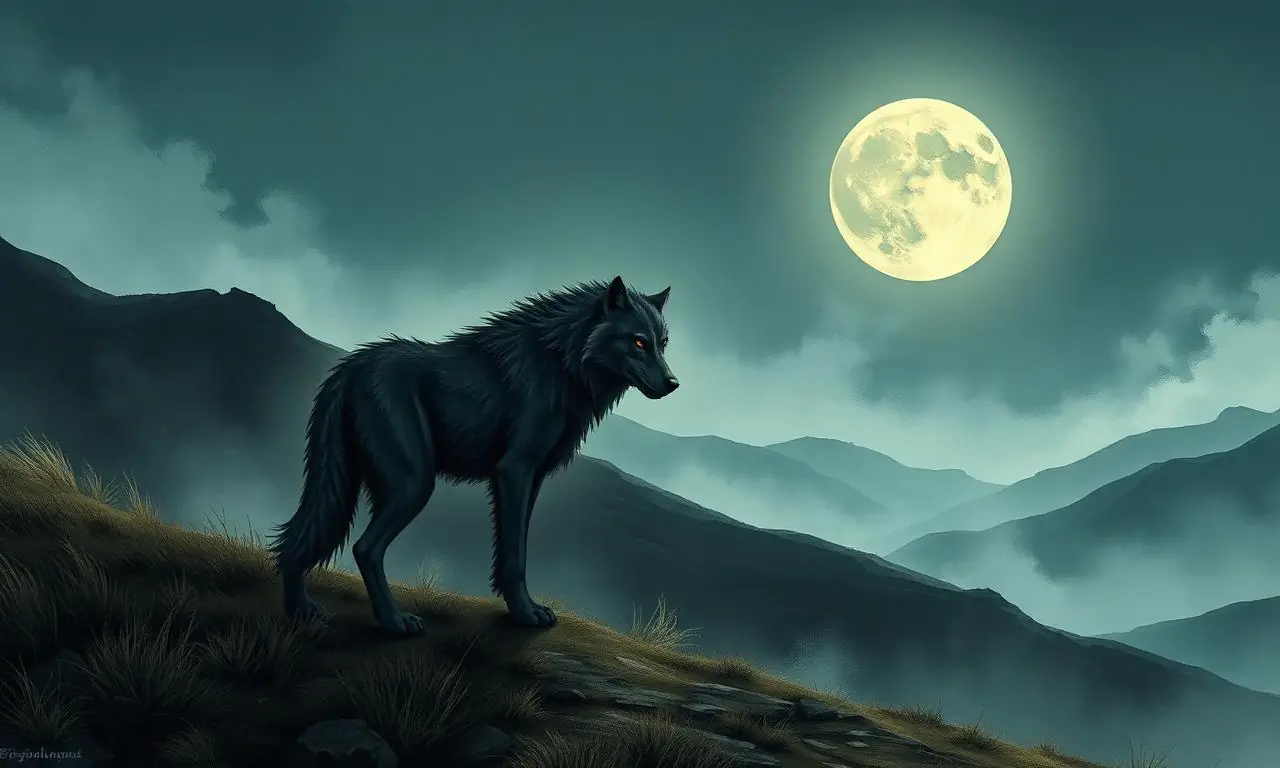
Werewolf legends run across Europe like a shadow through the trees. In France it was the loup-garou, in Germany the werwolf, in the north the man who wore a wolf belt or wolf skin and became something neither human nor animal.
At its simplest, the werewolf is a person transformed into a wolf. But the story has never really been simple. Sometimes the change is a curse. Sometimes it is a pact. Sometimes it comes with the full moon, and sometimes with rage, hunger, grief, or the breaking of a taboo.
Medieval people feared wolves for practical reasons: they took livestock, moved silently, and hunted in the dark beyond the firelight. The werewolf made that fear personal. It brought the wilderness into the village and the predator into the human body.
That is why the myth still works. The werewolf is about losing control. It is about the part of us that civilisation keeps chained — until the moon rises and the chain snaps.
Every werewolf story carries the same chill: by daylight, the monster may look like anyone. It may even look like you.