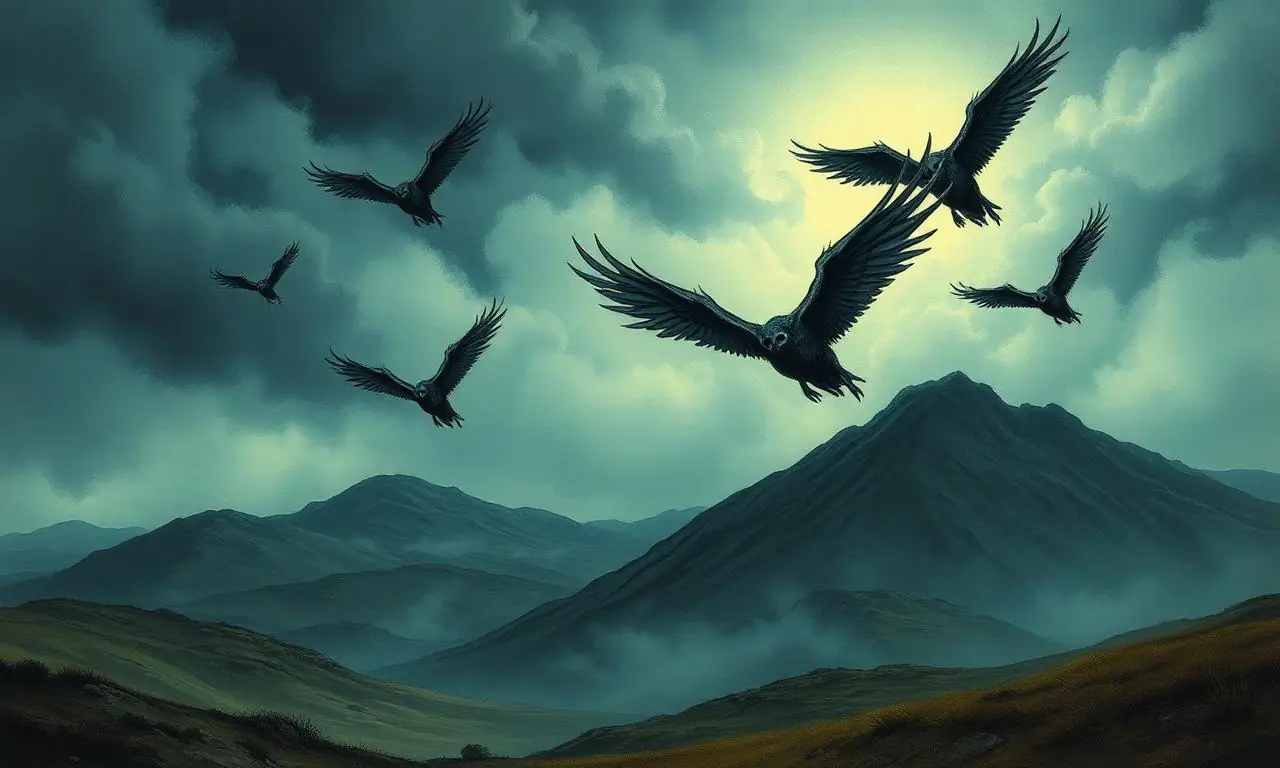
In the West Highlands and the Hebrides, there was an old rule about windows. At dusk, you closed the ones on the western side of the house. Even on a warm summer evening, even when the kitchen was sweltering — the western windows stayed shut. The reason was the Sluagh.
The Sluagh, in Scottish Gaelic tradition, are the unforgiven dead. They are the souls of those refused by heaven, refused by hell, and even refused by the Sidhe (the fairy folk), left with nowhere to rest. Denied the otherworld, they gathered in the air. They became a host. And they spent the rest of eternity flying westward — always westward — at sunset, hunting for new souls to drag with them into the dark.
The Sluagh are described in Carmichael's Carmina Gadelica (the great 19th-century collection of Highland oral tradition) as travelling in vast flocks, the sound of wings indistinguishable from a sudden wind. They appeared most often in the half-light: the moment between day and night, when the western sky was still red. They were said to fight one another constantly, mid-air, with the casualties falling like dark birds onto the moor.
Worse, they were known to seize the dying. If a person was close to death and the western window was open, the Sluagh would pour into the house, lift the soul straight from the body, and carry it away before any priest could be fetched. There are accounts in the Western Isles of families holding wakes specifically with the western shutters nailed shut, as a last protection.
Folklorists have long noted that the Sluagh are one of the bleakest survivals of pre-Christian belief in Scotland. They are not demons. They are not fairies. They are the dead the universe didn't want — and they are, perhaps because of that, the most pitiful and the most dangerous of all the spirits in Gaelic tradition.
Our Veiled Sluagh design captures them at the moment they were most feared: the flock against the last light, wings against a Highland sky, and the suggestion that one of them is looking down. Close the western window.