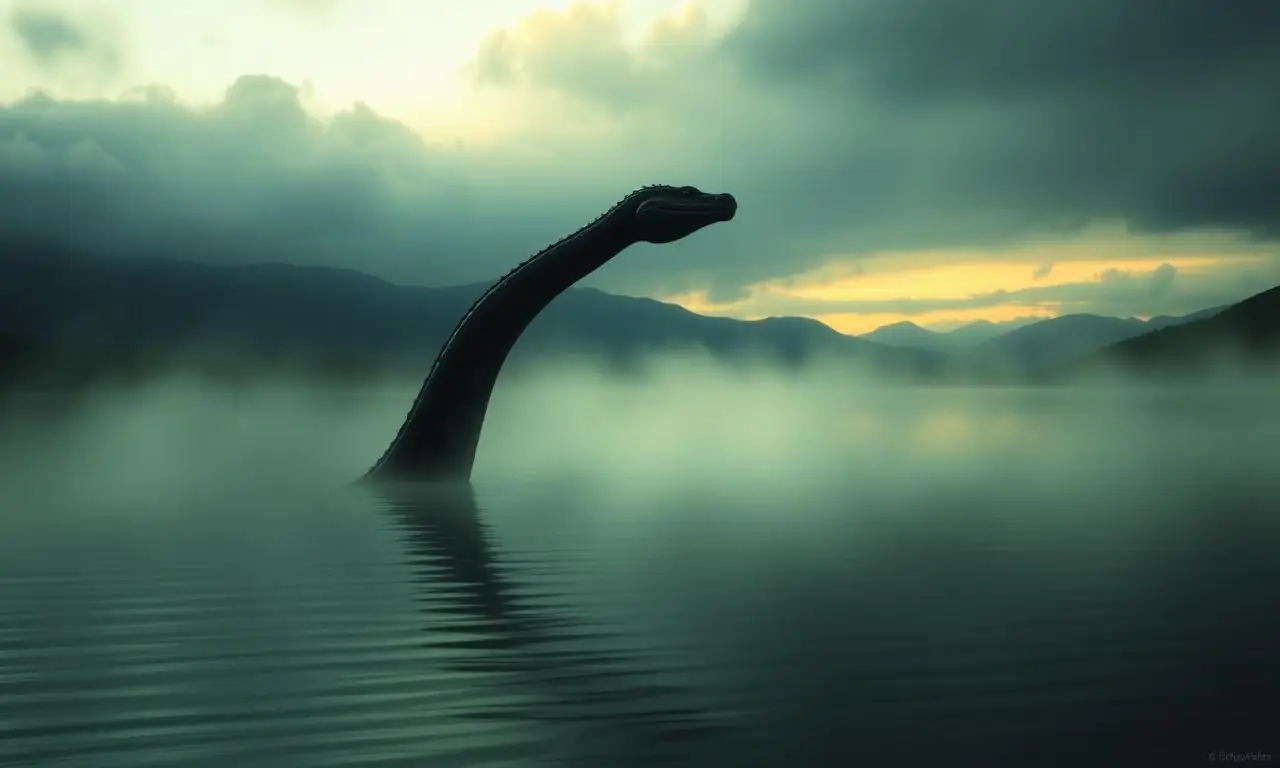
The Loch Ness Monster is the most famous lake creature in the world, but the story is far older than the grainy photographs of the 1930s. The earliest written account comes from the Life of St Columba, written in the 7th century, which describes the Irish saint banishing a 'water beast' that had attacked a man in the River Ness.
Loch Ness itself is the perfect home for a legend. It is over twenty miles long, stunningly deep, and so dark with peat that sunlight barely penetrates a few feet down. It holds more fresh water than every lake in England and Wales combined. Anything could be down there.
Modern sightings began in earnest in 1933, when a new road along the loch's northern shore brought a steady stream of witnesses. Reports describe a long neck, humped back, and a creature moving with surprising speed. Sonar scans, hoaxes, expeditions and documentaries followed — and Nessie became a global icon.
Sceptics have explanations: floating logs, otters, large eels, wave patterns, the famous surgeon's photograph long since revealed as a toy submarine. None of it has been enough to kill the story.
That is the heart of the Nessie myth. Even in an age of satellites and sonar, there is still room for mystery in the cold black water of a Highland loch. We want there to be something we have not yet measured.
Stand on the shore at dusk, watch the surface move, and you will understand exactly why nobody is ever quite ready to say the loch is empty.