Wales was built on what came out of the ground. Copper from Parys Mountain on Ynys Môn, once the greatest copper mine in the world. Slate from the mountains of Blaenau Ffestiniog, Bethesda and Llanberis, roofing half the cities of Europe. Lead and silver from the hills of the mid-Welsh uplands. Coal from the south. And wherever men went down into the dark with a candle and a pick, they found they were not alone.
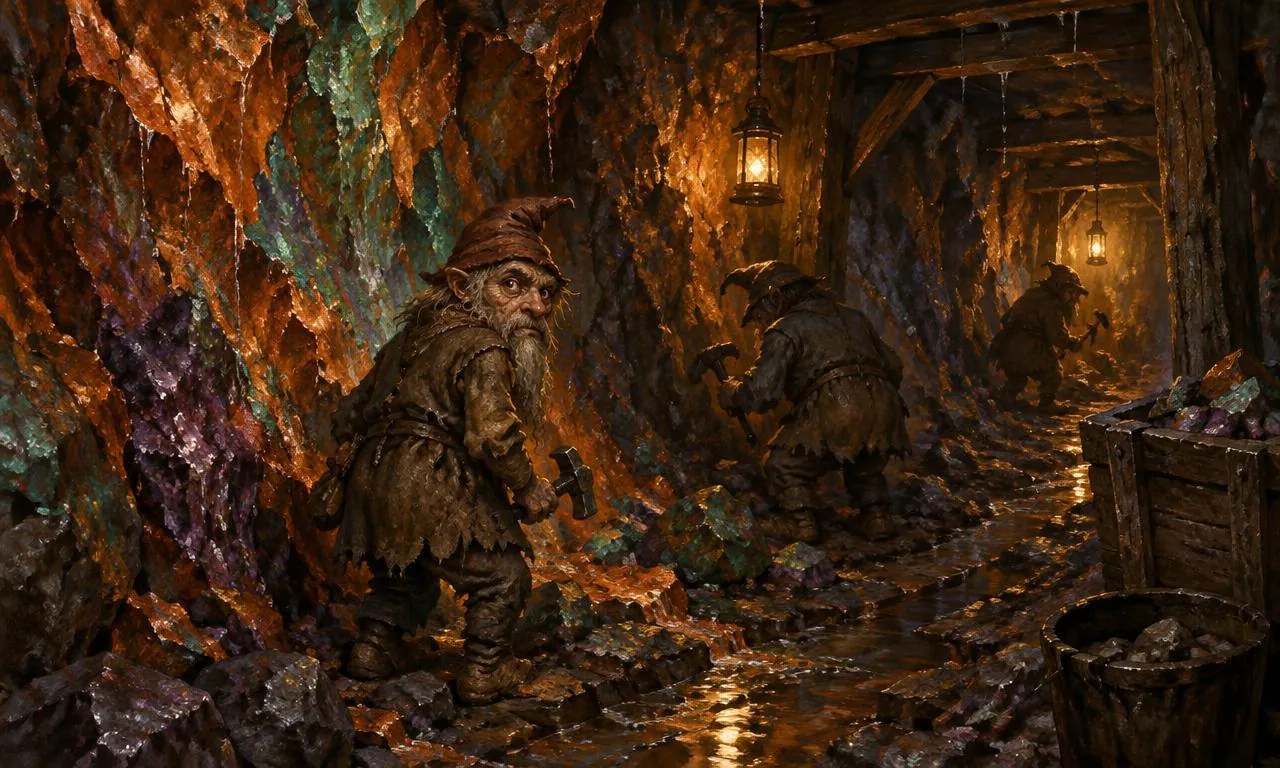
The Coblynau were the spirits of the mines. The old descriptions have them small — about half a yard tall — ugly but not unpleasant, dressed like miners themselves, with tiny picks, hammers and lanterns. They were almost never seen. They were heard. In the deep workings, where no living miner was cutting, came a steady tapping, the sound of little hammers on rock, the rumble of tiny carts, the ring of a pick. Tap. Tap. Tap.
To a sensible miner, that sound was good news. The Coblynau were said to knock where the richest seams lay; follow the tapping and you might strike a lode that made your fortune. And they were said to knock as a warning, too. If the tapping suddenly grew loud and hurried, or came from above your head, a wise man put down his tools and walked out, because the roof was about to come in. Plenty of families on Môn and in the slate villages told of a grandfather who left a level minutes before it collapsed, because he heard the knocking and listened.
Like the Pwca on the lanes above, the Coblynau expected manners. Miners would leave a crust from their dinner or a drop of their drink in the workings. They did not whistle underground, or swear loudly, or mock the little knockers. Treat them well and they worked alongside you, unseen. Laugh at them, curse them, or try to spy on them, and they would pelt you with pebbles, hide your tools, snuff your candle, lead you down a false seam — or simply go silent, and leave you with no warning at all.
It is easy to see where the stories came from. A deep mine is full of sounds: dripping water, settling rock, timbers creaking under weight, the distant echo of another team's picks. Mines kill without much warning. The belief that something small and knowing was down there with you, listening to the rock, was a kind of comfort — and the habit of stopping to listen was, very often, exactly what kept a man alive.
Cornish miners called them knockers, and Welsh and Cornish men worked side by side in many mines, trading stories as well as skills. But the Coblynau belong to Wales: to the orange and purple spoil of Parys Mountain, to the grey slate caverns under Blaenau, to the miners' chapels where men gave thanks for a shift that ended with everyone coming home.
Wear the Coblynau and you wear a salute to that underground Wales — tough, superstitious, hard-working, and always, always listening for the tap in the dark.