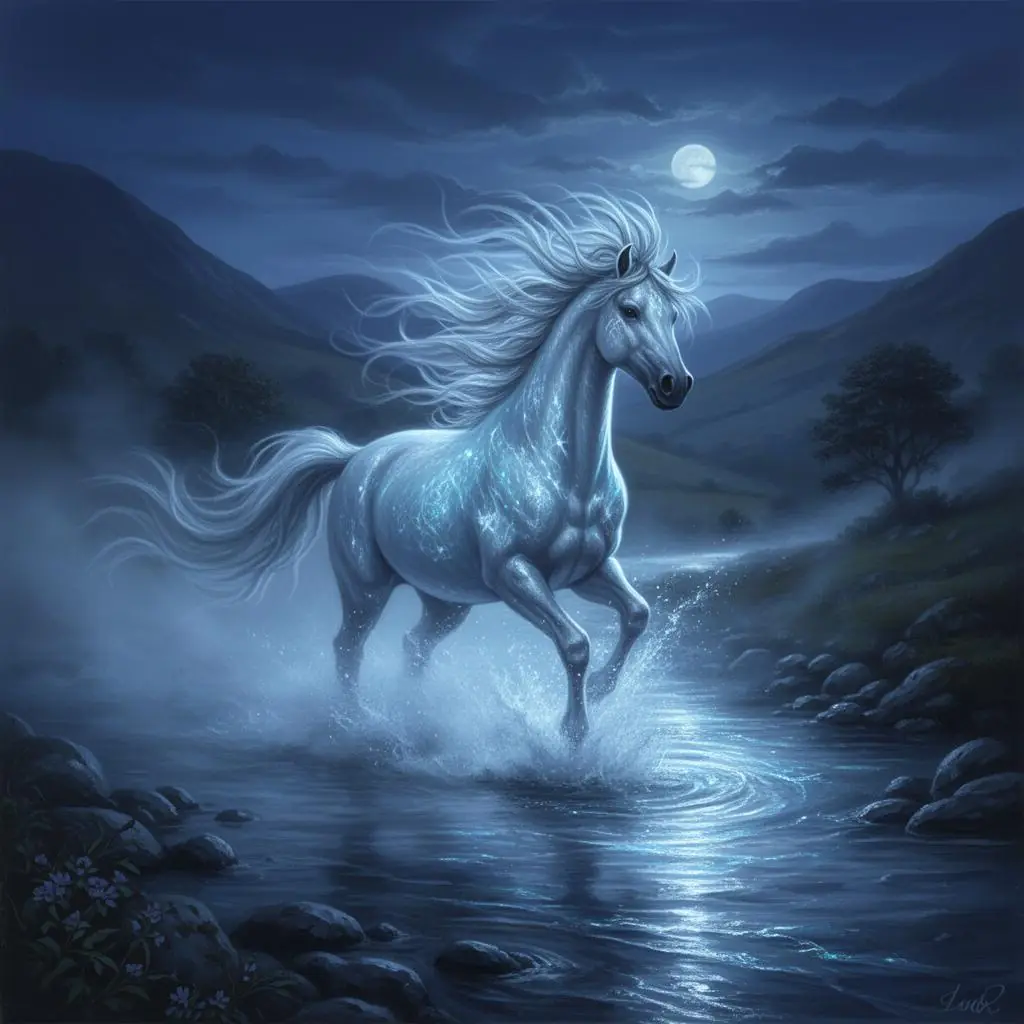
In the high streams and waterfalls of Wales, where the water tumbles cold and white off the mountains, the Ceffyl Dŵr is said to wait. The name simply means 'water horse' — but there is nothing simple about it.
It appears as a beautiful pale horse, shimmering as if lit from within, often grazing peacefully by the riverbank. To a tired traveller far from home, it is an answered prayer. They climb onto its back. The horse walks calmly for a moment. Then it leaps.
In some versions, the Ceffyl Dŵr soars into the sky and dissolves into mist mid-flight, dropping its rider to their death. In others, it plunges into the deepest pool of the river, taking the rider with it, never to surface again. In the cruellest tellings, it lets you off — but the experience leaves you mute, mad, or marked for the rest of your days.
It is the Welsh cousin of the Scottish Kelpie and the Manx Cabbyl-Ushtey, but the Ceffyl Dŵr has a particular character of its own: more elusive, more ethereal, less malicious than its cousins, and more often described as glowing, shapeshifting, dissolving into the very mist of the waterfall it came from.
It is a warning dressed up as a gift. The wild places of Wales are beautiful, the stories say, but they are not yours. The mountain water does not love you. The mist that comes off the falls is not empty.
If a perfect white horse ever finds you alone by a Welsh stream at dusk, the old folk would tell you the same thing they have told their children for a thousand years: walk away, and do not look back.