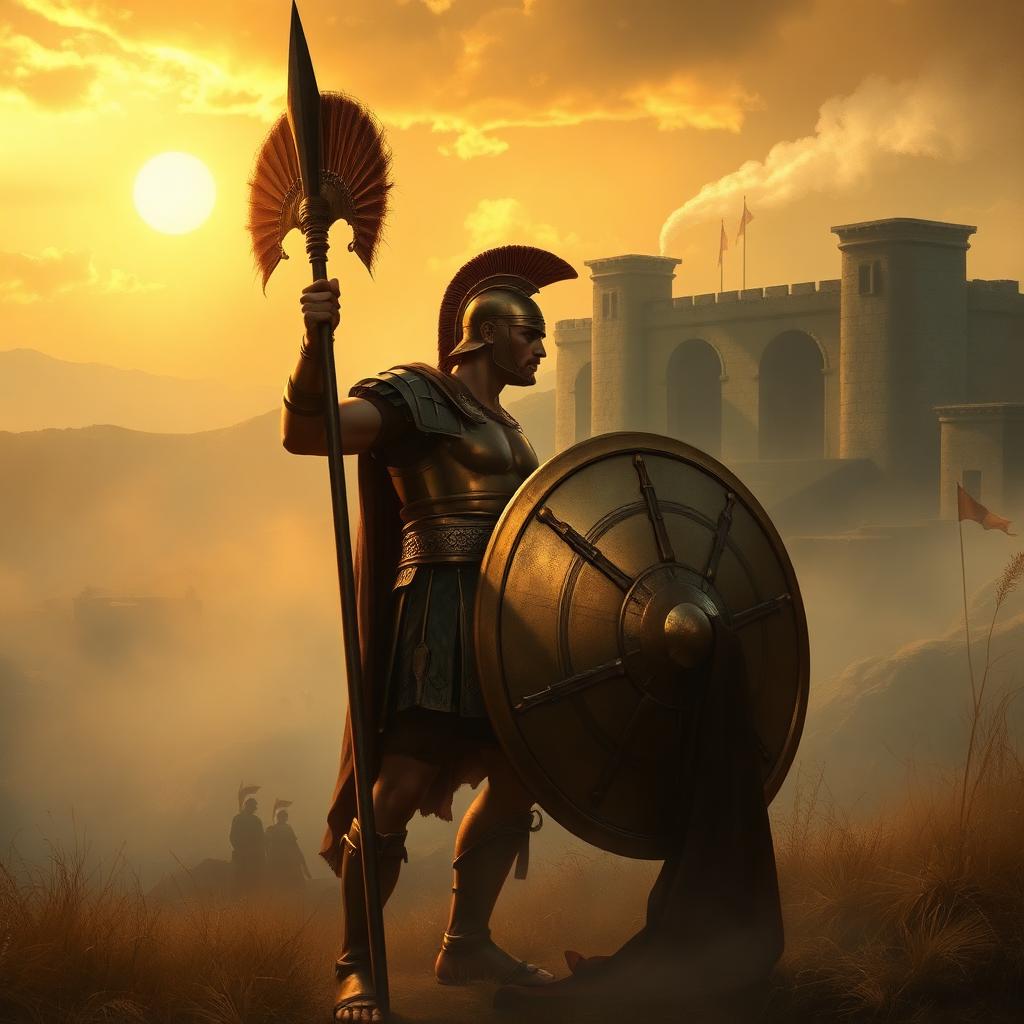
Achilles is the hero the Greeks could not stop telling stories about. Son of the sea-nymph Thetis and the mortal king Peleus, he was, by every account in Homer's Iliad, the fastest, fiercest and most beautiful warrior of his age — and the one most certain to die young.
His mother knew it. The Fates had given Thetis a choice over her son's life: a long, quiet, forgotten one — or a short, blazing existence whose name would never be lost. She tried to cheat both. According to the later tradition recorded by the Roman poet Statius, she carried the infant Achilles down to the river Styx, the black water that bordered the underworld, and dipped him in. The Styx's touch made his skin proof against any blade, any arrow, any wound. But she held him by one heel — and the river never touched it.
He grew up tutored by the centaur Chiron in the hills of Thessaly. When the call came to sail against Troy, Thetis hid him among the women of Skyros, dressed as a girl, to keep him from the war. Odysseus found him anyway. Achilles went to Troy and became exactly what his mother feared: the hinge on which the whole war turned.
He killed Hector, the prince of Troy, in single combat outside the city walls and dragged his body behind his chariot. He fought gods. He sulked in his tent for whole books of the Iliad because Agamemnon took a slave girl he loved. He was, in other words, very human — a hero who was vain, furious, tender and proud in roughly equal measure.
The end came, the tradition says, from an arrow loosed by Paris and guided by the god Apollo. It struck him in the heel. The one place his mother's grip had spared. The greatest warrior of the Greeks was killed by what is now, in every language touched by his story, called an Achilles' heel — the small, hidden weakness in something otherwise unstoppable.
Wear Achilles and you wear the oldest reminder in Western myth: nobody is invulnerable everywhere. The thing that brings you down is almost always the thing you forgot to protect.