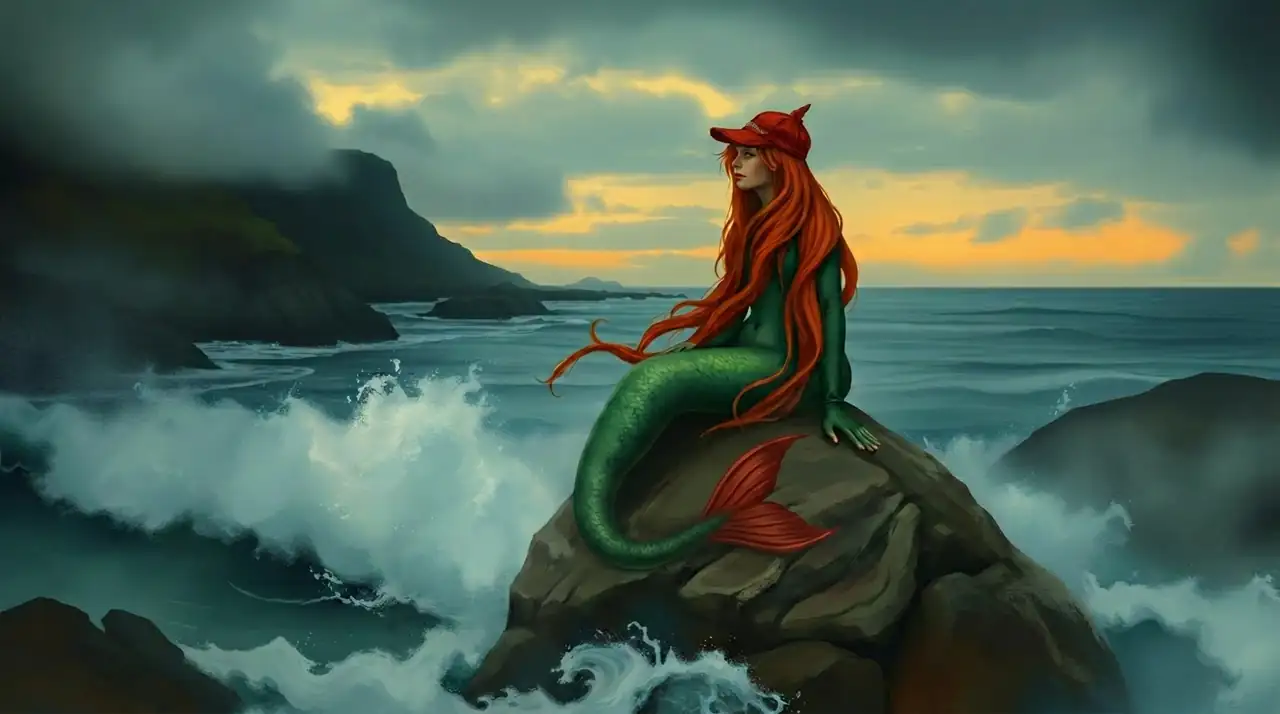
The Irish word for mermaid is Murúch, anglicised as Merrow — from muir (sea) and oigh (maid). But Irish folklore is very specific that the Merrow is not the singing seductress of southern European myth. She is gentler, sadder, and her story almost always ends with someone walking back into the sea.
The Merrow-women are described as beautiful, with long flowing hair the colour of seaweed or fire, pale green-tinged skin, and webbed fingers. They are seen on rocks off the wild coasts of Connemara, Clare, Kerry and Donegal, combing their hair at sunset. The Merrow-men are altogether stranger — green-skinned with red noses, pig-like eyes, sharp teeth, and a fondness for keeping the souls of drowned sailors in lobster pots beneath the waves.
Their magic lives in a small red cap, the cohuleen druith, woven from feathers and seaweed. Without it, a Merrow cannot return to the sea. Many Irish stories tell of a fisherman who finds a Merrow-woman asleep on the shore, hides her cap, marries her, and lives happily for years. They have children. The household prospers. And then — always — the wife discovers the cap hidden in the rafters or buried in the garden, and the call of the water becomes too strong. She kisses her children, walks down to the shore, and is gone. The fisherman never sees her again, but his children sometimes hear her singing from beneath the waves on stormy nights.
It is the same shape of story the Hebrideans tell about the Selkie. But the Merrow belongs to Ireland, and her cap belongs to the Atlantic.
Wear the Merrow and you wear the saddest love story the Irish coast has ever told — the one where the sea always wins.