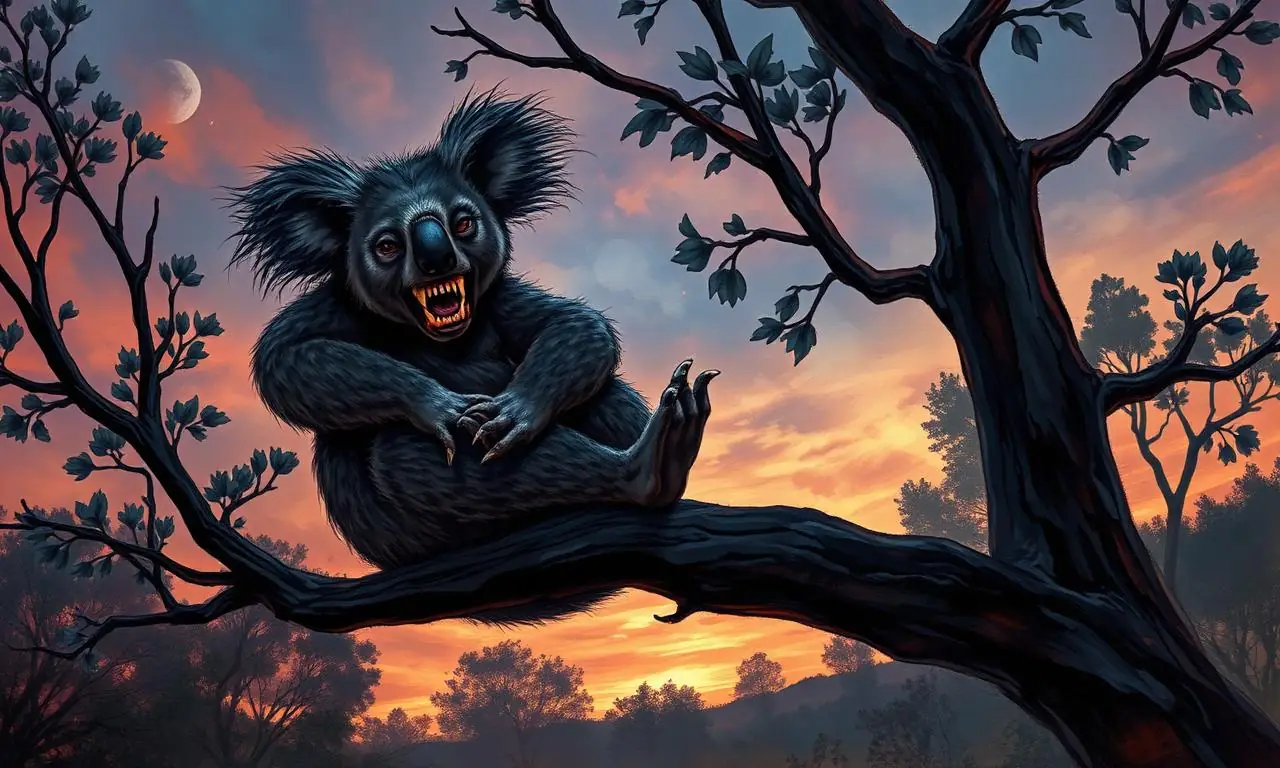
Of all the monsters in the world, the Drop Bear is the only one that doubles as a national in-joke. Officially classified as Thylarctos plummetus by the Australian Museum — yes, really, with a tongue firmly in cheek — it is described as a carnivorous koala the size of a leopard, weighing around 120 kilograms, that lurks in the upper branches of eucalyptus trees and drops onto the heads of unsuspecting walkers below.
The story is a modern Australian invention, almost certainly born in mid-twentieth-century barracks humour and refined by generations of Australians delighted to wind up backpackers. Tourists are gravely warned to wear forks in their hair, smear Vegemite behind their ears, or speak with an Australian accent — all certified Drop Bear deterrents, all completely made up.
But the tradition has the texture of real folklore. There are eyewitness reports. There are hoax photographs. There are scientific-sounding hazard maps. The Australian Museum publishes a straight-faced fact sheet about its hunting behaviour. Park rangers play along. Whole forests are 'known' to be Drop Bear country.
Underneath the joke there is something older. Australia really does have a fossil record of a giant marsupial lion, Thylacoleo carnifex, that climbed trees and ambushed prey. It vanished around 40,000 years ago — long enough to be forgotten, just recently enough that some folklorists wonder if Aboriginal Dreaming stories of tree-dwelling killers might preserve a memory of it. The Drop Bear may be a punchline today, but a creature like it was once very real.
Wear the Drop Bear and you wear the cheekiest cryptid in the southern hemisphere — the monster Australia made up, then half-believed.