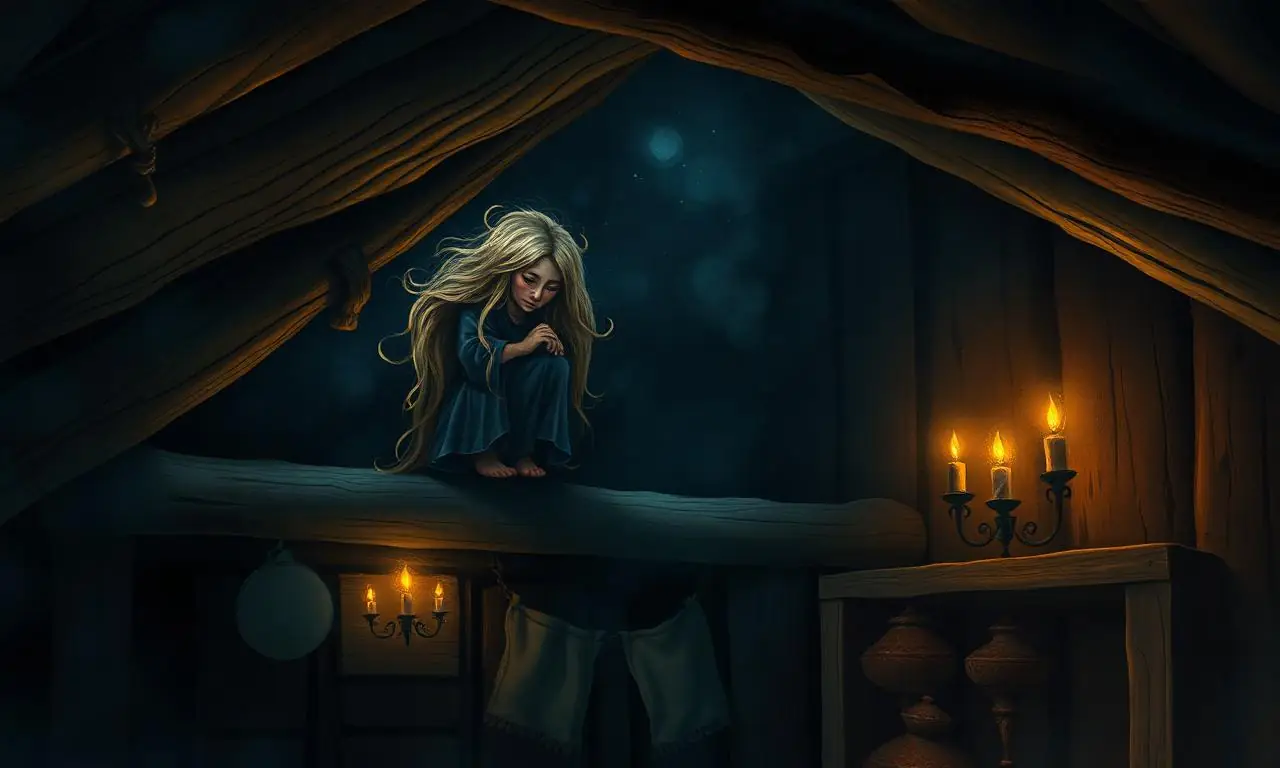
Where the Leshy ruled the forest, the Kikimora ruled the house. She was the female house spirit of Slavic folklore — small, thin, with long tangled hair, often described as no taller than a child and almost never seen straight on. You would catch her out of the corner of your eye, behind the stove, in the rafters, in the loom at night.
She was not always hostile. A well-kept house and a respectful family would find their Kikimora actually helpful — she would rock the cradle, mind the chickens, finish the spinning that had been left out at night. Leave her a bowl of milk by the hearth and she would keep your home in order.
But cross her — leave dirty dishes, neglect the children, swear inside the house — and she turned vicious. She would tangle the wool, sour the milk, pull hair, knock things from shelves, and worst of all sit on the chest of a sleeper and press the breath out of them. The Russian phrase for sleep paralysis still translates roughly as 'the Kikimora is sitting on me'.
She had two origins, depending on the region. Some said she was the spirit of an unbaptised baby buried beneath the threshold of the house. Others said she was the wife of the Domovoi — the male house spirit — and lived in the swamp until she married into the household.
The lesson is simple and very Slavic. The home is its own small kingdom, and something is always watching how you treat it. Keep it clean. Keep it kind. The Kikimora is patient.
Wear the Kikimora and you wear the quiet warning of every grandmother in eastern Europe.