Drive south out of Caernarfon, follow the Glaslyn river up into the mountains, and you will come to a small Eryri village whose name tells you the whole story before you arrive: Beddgelert — Gelert's Grave.
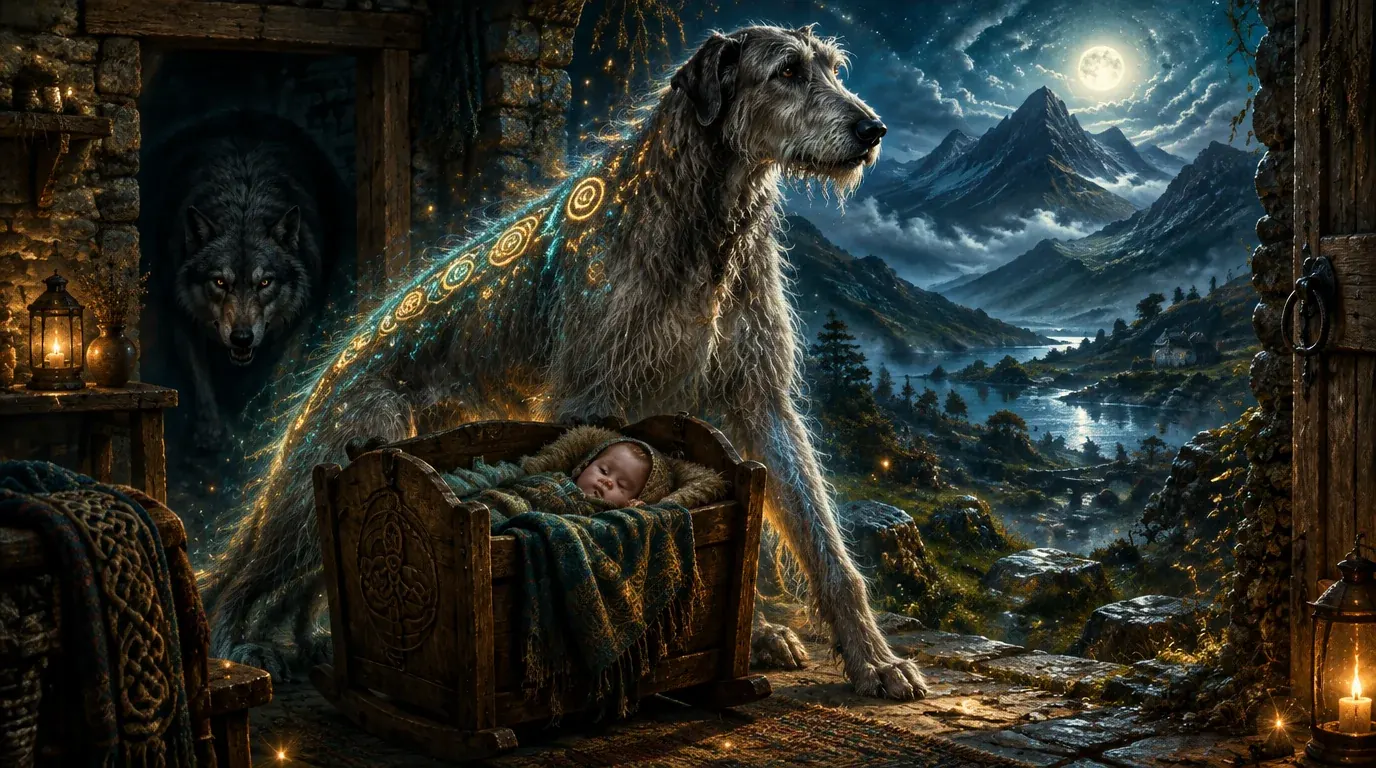
The legend belongs to Llywelyn the Great, prince of Gwynedd, who ruled North Wales in the early 1200s. He kept a great Irish wolfhound, Gelert, given to him (the story says) by King John as a wedding gift. The dog was his hunting companion, his guard, and the one he trusted to watch his infant son when no nurse was at hand.
One day Llywelyn rode out to hunt and Gelert, for once, did not follow. When the prince returned in the evening, the hound came to meet him at the door — and his muzzle was wet with blood. Llywelyn ran inside. The cradle was overturned. The baby was nowhere to be seen. The blankets were soaked red.
He drew his sword and ran Gelert through. The hound's dying yelp was answered by a small cry from under the upturned cradle. Llywelyn lifted the wood and there was his son, unharmed, lying beside the body of an enormous grey wolf that Gelert had killed defending him.
Llywelyn never hunted again. He carried the dog out into the meadow by the river, buried him there, and raised a cairn of stones over the grave. It is said he never smiled for the rest of his life. The village that grew up around the grave took its name from the hound.
Historians will tell you the story is not really medieval — that it was probably popularised in the late 1700s by a local innkeeper, David Pritchard, to bring tourists to Beddgelert. They will tell you the same tale exists in Sanskrit, in Persian, in dozens of European versions, all of them about a man who kills the loyal animal that has just saved a child. They are right. It is one of the oldest stories humans tell each other.
And yet it is also true that you can walk down through the village today, follow the path through the meadow, and find the grave under two stone slabs by the river, with the mountains rising green and grey behind it. People still leave flowers there. Children still cry. It does not matter, in the end, whether it really happened. It is the story North Wales tells itself about what loyalty costs, and what regret feels like, and why you should not draw your sword before you have looked under the cradle.
Wear Gelert and you wear the saddest of all the Eryri stories — the hound at the door, the bloodied muzzle, and the grave by the Glaslyn that the village has kept tended for two hundred years.